Constrained Motion by Second Pendulum or Simple Pendulum
1.सैकण्ड लोलक या सरल लोलक द्वारा प्रतिबन्धित गति (Constrained Motion by Second Pendulum or Simple Pendulum):

जानिए सैकण्ड लोलक या सरल लोलक द्वारा प्रतिबन्धित गति (Constrained Motion by Second Pendulum or Simple Pendulum) के अधीन कैसे आवर्तकाल ज्ञात करते हैं और आवर्त गति किस प्रकार ज्ञात करते है।
Also Read This Article:- Impulse in Dynamics
2.सेकण्ड लोलक या सरल लोलक द्वारा प्रतिबन्धित गति के उदाहरण (Constrained Motion by Second Pendulum or Simple Pendulum Examples):
Example: 1. सिद्ध करो कि प्रतिदिन x सेकण्ड धीरे चलने वाले घण्टे के लोलक की गलत लम्बाई को ठीक समय देने के लिए इसे  प्रतिशत कम करनी चाहिए.
(Show that an incorrect seconds pendulum of a clock which loses x seconds in a day must be shortened by  percent of length in order to keep correct time.)
Solution: यहाँ 
तथा dn = -x 

Percent of its length 
Example: 2. उस पहाड़ की ऊँचाई ज्ञात कीजिए जिसके शिखर के ऊपर समुद्र तल पर सेकण्ड बजाने वाला कोई घड़ी 20 सेकण्ड धीरे चलता है, जबकि पृथ्वी की त्रिज्या 4000 मील है। मानें। (Find the height of a mountain at the top of which a pendulum which beats seconds at sea level loses 20 secs a day, radius of the earth is 4000 miles.)
Solution: सूत्र (Formula): पृथ्वी की सतह (समुद्र तल) से ऊँचाई पर जाने पर गुरुत्वीय त्वरण (g) का मान घट जाता है, जिससे लोलक का आवर्तकाल (Time Period) बढ़ जाता है और घड़ी धीमी चलने लगती है।
आवर्तकाल का सूत्र: 
समुद्रतल पर आवर्तकाल  और पहाड़ के शिखर पर आवर्तकाल
 है, तो:

चूँकि ऊँचाई पर  होता है, इसलिए:

दिए गए मान: पृथ्वी की त्रिज्या (R) = 4000 मील (miles)
1 एक दिन में कुल सेकण्ड (t) =  = 86400 सेकण्ड
1 एक दिन में समय की हानि ( ) = 20 सेकण्ड
समय में होने वाली कमी और आवर्तकाल में सम्बन्ध इस प्रकार निकाला जाता है:
मान रखने पर:

 मील

Example: 3. एक सेकण्ड लोलक आधी मील ऊँचे पर्वत शिखर पर ले जाया जाता है, बताइए वह प्रतिदिन कितने सेकण्ड धीरे चलेगा? उसकी वर्तमान लम्बाई कितनी छोटी की जाए कि वह पर्वत शिखर पर ठीक सेकण्ड बजा सके?
(A pendulum is carried to the top of a mountain half a mile high, how many seconds will it lose per day? By how much must its present length be shortened so that it may beat right seconds at the top of the mountain.)
Solution: यहाँ  , R = 6400 km


अतः घड़ी का लोलक पर्वत पर शिखर ले जाते समय प्रतिदिन 10.8 सेकण्ड धीरे चलेगा. 

परन्तु dn = 0 क्योंकि लोलक सही समय रखेगा. 



अतः वर्तमान लम्बाई की  लम्बाई कम करने पर यह सही समय बताने लगेगा. Example of Constrained Motion by Second Pendulum
Example: 4. एक सरल लोलक पूरे चक्कर लगाने के लिए चलाया जाता है यदि उसका निम्नतम स्थिति में तनाव उच्चतम स्थिति में तनाव का k गुना हो और इन स्थितियों में वेग क्रमशः  तथा
 हो, तो सिद्ध करो कि (For a simple pendulum making complete revolution in a vertical plane. If the tension at the lowest position is k times the tension when the bob is in its highest position and
 be the velocities in these positions, prove that):
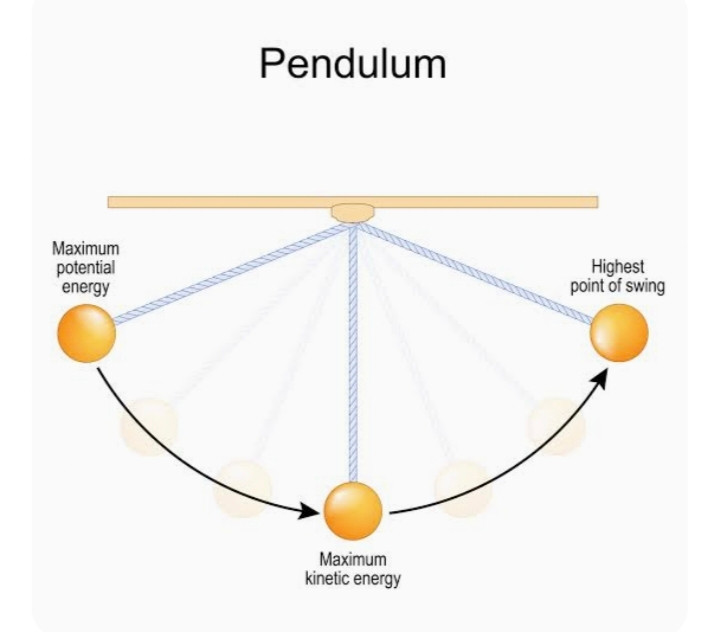

Solution: निम्नतम बिन्दु पर तनाव ऊपर की ओर और भार mg नीचे की ओर कार्य करता है। इनका परिणामी बल आवश्यक अभिकेन्द्र बल (Centripetal force) प्रदान करता है. 

उच्चतम बिन्दु पर वृत्त (Position 2) पर बल समीकरण:
उच्चतम बिन्दु पर तनाव और mg दोनों नीचे की ओर (केन्द्र की तरफ) कार्य करते हैं:

ऊर्जा संरक्षण का नियम (Conservation of Energy):
निम्नतम बिन्दु से उच्चतम बिन्दु तक जाने में बॉब 2l ऊँचाई ऊपर जाता है, कुल यांत्रिक ऊर्जा संरक्षण से:
निम्नतम बिन्दु पर कुल ऊर्जा = उच्चतम बिन्दु पर कुल ऊर्जा 
दोनों पक्षों में m का भाग देने पर तथा 2 से गुणा करने पर:


दी गई शर्त है: 
समीकरण (1) और (2) से और रखने पर का मान रखने पर:


[समीकरण (3) से] 




 you learn Constrained Motion by Second Pendulum from above example
Example: 5. एक सरल लोलक की बॉब को स्थायी साम्यावस्था से ऐसे वेग प्रक्षिप्त किया जो कि वृत्त के उच्चतम बिन्दु से गिरने पर बॉब ग्रहण करता। सिद्ध कीजिए कि  कोण बनाने में निम्न समय लगेगा
(If a bob of a simple pendulum is projected from the position of stable equilibrium with velocity equal to that due to falling falling from the highest point of the circle, show that that the time of describing any angle is) 
Solution: माना वृत्त की त्रिज्या (धागे की लम्बाई) l है। वृत्त का उच्चतम बिन्दु स्थायी साम्यावस्था (न्यूनतम बिन्दु) से 2l ऊँचाई पर होता है.
यांत्रिक ऊर्जा संरक्षण या गुरुत्व के अधीन मुक्त रूप से गिरने के नियम से उच्चतम बिन्दु (2l ऊँचाई) से गिरने पर प्राप्त वेग ( ) होगा:

ऊर्जा संरक्षण का नियम (Law of conservation of Energy):
मान लें कि जब लोलक उर्ध्वाधर (Vertical) से कोण बनाता है, तब बॉब का वेग u है और वह  ऊँचाई पर है.
न्यूनतम बिन्दु (साम्यावस्था) और कोण पर कुल ऊर्जा बराबर होगी:
प्रारंभिक गतिज ऊर्जा = अंतिम गतिज ऊर्जा + स्थितिज ऊर्जा 
चूँकि  और

दोनों पक्षों में  से भाग देने पर:







रेखीय वेग 
उपर्युक्त समीकरण में रखने पर: 
चरों को पृथक् करने पर: 




Example: 6. एक सेकण्ड लोलक क्षैतिज के साथ कोण पर झुकी हुई दीवार पर लटका (लगा) हुआ है। सिद्ध करो कि इसके पूरे दोलन का समय  होगा
(A Second’s Pendulum hangs against a wall inclined at an angle to the horizontal. Show that the time of a complete oscillation is )
Solution: माना दीवार क्षैतिज के साथ कोण पर झुकी हुई है.
माना पेण्डुलम की किन्हीं दो स्थितियों के बीच कोण =  , चाप = s

तथा 
बॉब पर भार  (या चल बल वाली रेखा के अनुदिश बल) कार्यरत है. स्पर्श रेखा के अनुदिश त्वरण का घटक होगा:
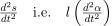
स्पर्श रेखा के अनुदिश गति का समीकरण:

[ छोटा है अतः
 ]
जो कि S.H.M. का मानक समीकरण है और इसलिए सम्पूर्ण दोलन का अभीष्ट समय: 
Example: 7. यदि एक लोलक जिसकी लम्बाई l है, इसकी डोरी का एक सिरा एक खूटी से बन्धा है जो कि एक कोण पर झुके हुए तल पर है। डोरी तथा बॉब (भार) को तल पर होते हुए इसके दोलन का समय t सेकण्ड है। यदि लोलक जिसकी लम्बाई l, उर्ध्वाधर लटकने पर दोलन एक सेकण्ड में करे, तो सिद्ध कीजिए कि:
(A pendulum of length l has one end of the string fastened to a peg on a smooth inclined plane of inclination with the string and the weight on the plane, its time of oscillation is t seconds. If the pendulum of length l’ oscillates in one second when suspended vertically, prove that ):
Solution: उपर्युक्त Example से:
यदि यदि तल पर झुका होता

यदि  और l = l’; t = 1
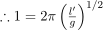

समीकरण (1) को (2) से भाग देने पर: 
Example: 8. एक दोलायमान लोलक की डोरी में तनाव जबकि बॉब (bob) निम्नतम स्थिति में है, भार का n गुना है। प्रदर्शित करो कि उर्ध्वाधर के दोनों ओर दोलन कोण होगा:
(In an oscillating pendulum the tension of the string when the bob is in its lowest position is n times the weight of the bob. Prove that the angle of swing on each side of the vertical is) 
Solution: माना लोलक डोरी की लम्बाई = L, बॉब का द्रव्यमान = m, गुरुत्वीय त्वरण = g, अधिकतम विक्षेपण कोण =
ऊर्जा संरक्षण के नियम से
जब बॉब अपनी अधिकतम स्थिति () से निम्नतम स्थिति पर आता है, तो उसकी स्थितिज ऊर्जा घटती है और गतिज ऊर्जा बढ़ती है.
ऊँचाई में कमी 
गतिज ऊर्जा में वृद्धि: 
ऊर्जा संरक्षण से: 

निम्नतम बिन्दु पर बलों का संतुलन
निम्नतम बिन्दु पर बॉब एक वृत्ताकार पथ पर गति कर रहा होता है, जिसके लिए आवश्यक अभिकेन्द्र बल (Centripetal Force) डोरी में तनाव (T) और भार (mg) के अंतर से प्राप्त होता है: 
प्रश्न के अनुसार निम्नतम स्थिति में तनाव बॉब के भार का n गुना है: 
समीकरण (2) में T और  का मान रखने पर:






उपर्युक्त उदाहरणों के हल द्वारा सैकण्ड लोलक या सरल लोलक द्वारा प्रतिबन्धित गति (Constrained Motion by Second Pendulum or Simple Pendulum) को समझ सकते हैं।
Also Read This Article:- Envelope of Paths of a Projectile: BSc Mathematics Guide
3.छात्र-छात्राओं के लिए सैकण्ड लोलक या सरल लोलक द्वारा प्रतिबन्धित गति प्रैक्टिस क्वेश्चंस (Pratice Question of Constrained Motion by Second Pendulum or Simple Pendulum for Students):
(1.) A heavy particle of mass m is projected along the inside of a smooth vertical circle of radius a from its lowest point with velocity u. The least value of u for describing the complete circle is
(a)  (b)
 (c)
 (d)

(2.) The greatest angle through which a person can oscillate on a swing the ropes of which can support twice the person’s weight at least is
(a)  (b)
 (c)
 (d)

(3.) How many seconds a clock would lose per day if the length of its pendulum were increased in the ratio 900:901?
(a) 50 seconds (b) 48 seconds (c) 46 seconds (d) 44 seconds
उत्तर (Answers):(1.)(d) (2.)(b)(3)(d)
उपर्युक्त सवालों को हल करने पर सैकण्ड लोलक या सरल लोलक द्वारा प्रतिबन्धित गति (Constrained Motion by Second Pendulum or Simple Pendulum) को अच्छी तरह से समझ सकते हैं क्योंकि स्वयं प्रैक्टिकल रूप से सवालों को हल करने पर कांसेप्ट अच्छी तरह समझ में आती है।
### 📢 यदि आपको यह गणित का आर्टिकल पसंद आया हो:
* 👥 **मित्रों के साथ शेयर करें:** ज्ञान बांटने से बढ़ता है,इसलिए इसे अपने दोस्तों के साथ ज़रूर साझा करें।
* 🔔 **वेबसाइट को फॉलो करें:** अगर आप यहाँ पहली बार आए हैं, तो हमारे **ईमेल सब्सक्रिप्शन** को फॉलो करें।साथ ही, **Push Notification (घंटी के आइकॉन) को भी अलाउ (Allow) करें** ताकि हर नए ज़रूरी आर्टिकल और टेस्ट सीरीज़ का नोटिस आपके मोबाइल पर तुरंत मिल जाए!
* 💬 **अपने सुझाव दें:** यदि आपकी कोई समस्या है या कोई सुझाव देना चाहते हैं,तो नीचे **कमेंट** करके हमें ज़रूर बताएं।
**पूरा आर्टिकल पढ़ने के लिए आपका स्वागत है!** 🙏
Also Read This Article:- Pendulum
4.सैकण्ड लोलक या सरल लोलक द्वारा प्रतिबन्धित गति (Frequently Asked Questions Related to Constrained Motion by Second Pendulum or Simple Pendulum)
Q: 1. सरल लोलक किसे कहते हैं? (What is a Simple Pendulum?)
उत्तर: यदि एक भारी कण को एक हल्की अवितान्य डोरी के एक सिरे पर बाँध दिया जाए जिसमें दूसरा सिरा स्थिर हो तथा एक उर्ध्वाधर वृत्त में दोलन करें तो ऐसे कण को एक सरल लोलक कहते हैं।
Q: 2. आवर्त गति से क्या आशय है? (What is meant by Periodic Motion / Second’s Pendulum?)
उत्तर: एक सरल लोलक जिससे बजने (beats) का समय एक सेकण्ड होता वह सेकण्ड लोलक (Second’s Pendulum) कहलाता है.
Q: 3. सरल लोलक की आवर्त गति का समीकरण \frac{d^2\theta}{dt^2} = -\frac{g}{l}\theta
उत्तर: आवर्तकाल T = \frac{2\pi}{\sqrt{\frac{g}{l}}} = 2\pi\sqrt{\frac{l}{g}}
उपर्युक्त प्रश्नों के उत्तर द्वारा सैकण्ड लोलक या सरल लोलक द्वारा प्रतिबन्धित गति (Constrained Motion by Second Pendulum or Simple Pendulum) की प्राइमरी टर्म्स के बारे में जान सकते हैं।
5.छात्र-छात्राओं से आज का प्रश्न (Today’s Question to Students):

🎯 विनर्स कॉर्नर:क्या आप इस सवाल का सही जवाब दे सकते हैं?अपने नाम के साथ नीचे कमेंट करें!सही जवाब देने वाले Top Students के नाम हमारी आगे post/is article ke update में Photo ya Special Mention के साथ publish की जाएगी।अपना जवाब अभी दर्ज करें!👇
*”6 वर्ष पहले कमल एवं सुरेश की आयुओं का अनुपात 6:5 था।4 वर्ष बाद उनकी आयुओं का अनुपात 11:10 होगा। सुरेश की वर्तमान आयु क्या है?”*
(6 years ago the ratio of the ages of Kamal and Suresh was 6 : 5. After 4 years the ratio of their ages will be 11 : 10. What is the present age of Suresh?)
*पिछली प्रश्नोत्तरी का हल*
निम्नलिखित शब्द बनाए जा सकते हैं:छह
MAT,TRI,LATE,AT,ATE,MATRIC
*Previous Quiz Solution*
The following English words can be formed from the given word as per the statement:six
MAT,TRI,LATE,AT,ATE,MATRIC
*”यह आर्टिकल **Satyam Mathematics** ब्लॉग पर **Satyam Coaching Centre** के द्वारा तैयार किया गया है।”*





About Author

Sanjay Kumawat
(1.)**Satyam Narain Kumawat** **Website Name:Satyam Mathematics** *Owner:satyamcoachingcentre.in* *Sthan:Manoharpur,Jaipur (Rajasthan)* **Teaching Mathematics aur Anya Anubhav** ***Shiksha:**B.sc.,B.Ed.,(M.sc. star Ke Mathematics Ko Padhane ka Anubhav),B.com.,M.com. Ke vishayon Ko Padhane ka Anubhav,Philosophy,Psychology,Religious,sanskriti Mein Gahri Ruchi aur Adhyayan ***Anubhav:**phichale 23 varshon se M.sc.,M.com.,Angreji aur Vigyan Vishayon Mein Shikshaka Ka Lamba Anubhav ***Visheshagyata:*Maths,Adhyatma (spiritual),Yog vishayon ka vistrit Gyan* ****In Brief:I have read about M.sc. books,psychology,philosophy,spiritual, vedic,religious,yoga,health and different many knowledgeable books.A dedicated math expert with 23+ years of teaching experience upto M.sc. ,M.com.,English and science.After guiding thousands of students through Satyam Coaching Center,now share Mathematics,Trigonometry (Upto M.sc) and Educational Strategies in simple language on this blog from December 2018.* (2.)**(Technical Expert & Co-Admin):** ***Name:Sanjay Kumawat* *Qualification:Graduate in Mechanical Engineering (B.Tec) in 2013* *Profession:Physics Lecturer* *Teaching Experience:15 Years and Teaching to NEET,JEE Students* *Technical Experience:5 Years Coding and Article Editing,Classic Photo Editing by Laptop in Satyam Coaching Centre Blog* *A school lecturer and digital content strategist.On this blog,he handles all the responsibility of coding,image editing,SEO, and technical management,so that the mathematical content reaches the readers in a very accurate and beautiful form.* Updated on 15.06.2026

