Definite Integral Class 12
1.निश्चित् समाकलन कक्षा 12 (Definite Integral Class 12),निश्चित् समाकलन के उदाहरण (Definite Integral Examples):

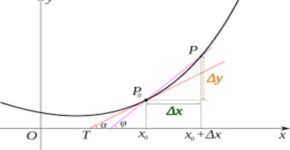
निश्चित् समाकलन कक्षा 12 (Definite Integral Class 12) में योग सीमा के रूप में तथा अन्तिम बिन्दुओं पर फलन के मानों के अन्तर के रूप में अध्ययन कराया जाता है।निश्चित् समाकलन का एक अद्वितीय मान होता है।एक निश्चित् समाकलन को अनिश्चित समाकलन की विधि से समाकलन किया जाता है तथा निश्चित् समाकलन का मान ज्ञात करने के लिए निश्चित् समाकलनों के गुणधर्मों का भी प्रयोग किया जाता है।तत्पश्चात् यह परिसर [a,b] पर f का निश्चित् समाकलन कहलाता है जहाँ a और b समाकलन की सीमाएँ कहलाती हैं a निम्न सीमा कहलाती है और b को उच्च सीमा कहते हैं।
आपको यह जानकारी रोचक व ज्ञानवर्धक लगे तो अपने मित्रों के साथ इस गणित के आर्टिकल को शेयर करें।यदि आप इस वेबसाइट पर पहली बार आए हैं तो वेबसाइट को फॉलो करें और ईमेल सब्सक्रिप्शन को भी फॉलो करें।जिससे नए आर्टिकल का नोटिफिकेशन आपको मिल सके । यदि आर्टिकल पसन्द आए तो अपने मित्रों के साथ शेयर और लाईक करें जिससे वे भी लाभ उठाए । आपकी कोई समस्या हो या कोई सुझाव देना चाहते हैं तो कमेंट करके बताएं।इस आर्टिकल को पूरा पढ़ें।
Also Read This Article:-Differential Equation Reducible to LDE
2.निश्चित् समाकलन कक्षा 12 पर आधारित उदाहरण (Examples Based on Definite Integral Class 12):
Example:1. \int_{0}^{\frac{\pi}{4}} \sqrt{1+\sin 2 x} d x का मान है?
Solution: \int_{0}^{\frac{\pi}{4}} \sqrt{1+\sin 2 x} d x \\ I =\int_{0}^{\frac{\pi}{4}} \sqrt{\left(\sin ^{2} x+\cos ^{2} x+2 \sin x \cos x\right)} d x \\ =\int_{0}^{\frac{\pi}{4}} \sqrt{(\sin x+\cos x)^{2}} d x \\ =\int_{0}^{\frac{\pi}{4}}(\sin x+\cos x) d x \\ =[-\cos x+\sin x]_{0}^{\frac{\pi}{4}} \\ =-\cos \frac{\pi}{4}+\sin \frac{\pi}{4}+\cos 0-\sin 0 \\ =-\frac{1}{\sqrt{2}}+\frac{1}{\sqrt{2}}+1-0 \\I =1
Example:2. \int_{2}^{5} \frac{\sqrt{x}}{\sqrt{x}+\sqrt{7-x}} d x का मान है?
Solution: I=\int_{2}^{5} \frac{\sqrt{x}}{\sqrt{x}+\sqrt{7-x}} d x \cdots(1) \\ I=\int_{2}^{5} \frac{\sqrt{7-x}}{\sqrt{7-x}+\sqrt{x}} \cdots(2)
[गुणधर्म IV से: \int_{a}^{b} f(x) d x=\int_{a}^{b} f(a+b-x) d x]
(1) व (2) को जोड़ने पर:
2 I =\int_{2}^{5}\left(\frac{\sqrt{x}}{\sqrt{x}+\sqrt{7-x}}+\frac{\sqrt{7-x}}{\sqrt{7-x}+\sqrt{x}}\right) d x \\=\int_{2}^{5}\left(\frac{\sqrt{x}+\sqrt{7-x}}{\sqrt{x}+\sqrt{7-x}}\right) d x \\ =\int_{2}^{5} 1 d x \\ =[x]_{2}^{5}=5-2=3
Example:3. \int_{a-c}^{b-c} f(x+c) d x का मान है:
Solution: \int_{a-c}^{b-c} f(x+c) d x \\ =\int_{a-c}^{b} f(x+c) d x+\int_{b}^{-c} f(x+c) d x \\ =-\int_{b}^{a-c} f(x+c) d x+\int_{b}^{c} f(x+c) d x \\ =-\int_{b}^{a} f(x+c) dx-\int_{b}^{-c} f(x+c) d x -\int_{b}^{c} f(x+c) d x \\ =\int_{a}^{b} f(x+c) dx+\int_{b}^{c} f(x+c) d x -\int_{b}^{c} f(x+c) d x \\ =\int_{a}^{b} f(x+c) d x
Example:4. A(x)=\int_{0}^{x} \theta^{2} d \theta हो तो A(3) का मान होगा:
Solution: A(x)=\int_{0}^{x} \theta^{2} d \theta \\ A(x)=\left[\frac{\theta^{3}}{3}\right]_{0}^{x} \\ \Rightarrow A(x)=\frac{x^{3}}{3} \\ \Rightarrow A(3)=\frac{3^{3}}{3}=9
निम्नलिखित का समाकलन कीजिए:
Example:5. \int_{1}^{2} \frac{(x+3)}{x(x+2)} d x
Solution: \int_{1}^{2} \frac{(x+3)}{x(x+2)} d x \\ =\int_{1}^{2} \frac{x+2+1}{x(x+2)} d x \\ =\int_{1}^{2} \frac{x+2}{x(x+2)} d x+\int_{1}^{2} \frac{1}{x(x+2)} d x \\ =\int_{1}^{2} \frac{1}{x} d x+\frac{1}{2} \int_{1}^{2}\left[\frac{1}{x}-\frac{1}{x+2}\right] d x \\ =\int_{1}^{2} \frac{1}{x} d x+\frac{1}{2} \int_{1}^{2} \frac{1}{x} d x-\frac{1}{2} \int \frac{1}{x+2} d x \\ =\frac{3}{2} \int_{1}^{2} \frac{1}{x} d x-\frac{1}{2} \int_{1}^{2} \frac{1}{x+2} d x \\ =\frac{3}{2}[\log x]_{1}^{2}-\frac{1}{2}[\log (x+2)]_{1}^{2} \\ =\frac{3}{2}[\log 2-\log 1]-\frac{1}{2}\left[\log 4-\log 3\right] \\ =\frac{3}{2} \log 2-\frac{1}{2} \log 4+\frac{1}{2} \log 3 \\ =\frac{3}{2} \log 2-\frac{1}{2} \log 2^{2}+\frac{1}{2} \log 3 \\=\frac{3}{2} \log 2-\log 2+\frac{1}{2} \log 3 \\=\frac{1}{2} \log 2+\frac{1}{2} \log 3 \\=\frac{1}{2} \log 6
Example:6. \int_{1}^{2} \frac{x e^{x}}{(1+x)^{2}} d x
Solution: \int_{1}^{2} \frac{x e^{x}}{(1+x)^{2}} d x \\ =\int_{1}^{2} \frac{x e^{x}+e^{x}-e^{x}}{(1+x)^{2}} d x \\ =\int_{1}^{2} \frac{x e^{x}+e^{x}}{(1+x)^{2}} d x-\int_{1}^{2} \frac{e^{x}}{(1+x)^{2}} dx \\ =\int_{1}^{2} \frac{(1+x) e^{x}}{(1+x)^{2}} d x-\int_{1}^{2} \frac{e^{x}}{(1+x)^{2}} d x \\ =\int_{1}^{2} \frac{e^{x}}{1+x} d x-\int_{1}^{2} \frac{e^{x}}{(1+x)^{2}} d x \\ \int e^{x}\left[f(x)+f^{\prime}(x)\right] d x=e^{x} f(x) से
=\left[\frac{e^{x}}{1+x}\right]_{1}^{2} \\ =\frac{e^{2}}{3}-\frac{e}{2} \\ =\frac{2 e^{2}-3 e}{6} \\ =\frac{1}{6} e(2 e-3)
Example:7. \int_{0}^{\frac{\pi}{2}} e^{x}\left(\frac{1+\sin x}{1+\cos x}\right) d x
Solution: \int_{0}^{\frac{\pi}{2}} e^{x}\left(\frac{1+\sin x}{1+\cos x}\right) d x \\ I=\int_{0}^{\frac{\pi}{2}} \frac{e^{x} \sin x}{1+\cos x} d x+\int_{0}^{\frac{\pi}{2}} \frac{e^{x}}{1+\cos x} d x
माना f(x) =\frac{\sin x}{1+\cos x} \\ f^{\prime}(x) =\frac{(1+\cos x) \cos x+\sin ^{2} x}{(1+\cos x)^{2}} \\ =\frac{\cos x+\cos ^{2} x+\sin ^{2} x}{(1+\cos x)^{2}} \\ =\frac{1+\cos x}{(1+\cos x)^{2}} \\ \Rightarrow f^{\prime}(x) =\frac{1}{(1+\cos x)} \\ \int e^{x}\left[f(x)+f^{\prime}(x)\right] d x=e^{x} f(x) से
I=\left[\frac{e^{x} \sin x}{1+\cos x}\right]_{0}^{\frac{\pi}{2}}\\ =\frac{e^{\frac{\pi}{2}} \sin \frac{\pi}{2}}{1+\cos \frac{\pi}{2}}-\frac{e^{0} \sin \theta}{1+\cos 0}\\ =\frac{e^{\frac{\pi}{2}}}{1}=e^{\frac{\pi}{2}}
Example:8. \int_{\frac{1}{3}}^{1} \frac{\left(x-x^{3}\right)^{\frac{1}{3}}}{x^{4}} d x
Solution: \int_{\frac{1}{3}}^{1} \frac{\left(x-x^{3}\right)^{\frac{1}{3}}}{x^{4}} d x \\ I=\int_{\frac{1}{3}}^{1}\left[x^{3}\left(\frac{1}{x^{2}}-1\right)\right]^{\frac{1}{3}} d x \\ =\int_{\frac{1}{3}}^{1} \frac{x^{4}}{\left(\frac{1}{x^{2}}-1\right)^{\frac{1}{3}}} d x \\ =\int_{\frac{1}{3}}^{1} \frac{\left(\frac{1}{x^{2}}-1\right)^{\frac{1}{3}}}{x^{3}} d x
put \frac{1}{x^{2}}-1=t \\ -\frac{2}{x^{3}} d x=d t \\ \frac{1}{x^{3}} d x=-\frac{d t}{2}
जब x=\frac{1}{3} तो t=8
जब x=1 तो t=0
Example:9. \int_{0}^{\frac{\pi}{2}} x^{2} \cos ^{2} x d x
Solution: \int_{0}^{\frac{\pi}{2}} x^{2} \cos ^{2} x d x \\ I=\int_{0}^{\frac{\pi}{2}} x^{2}\left(\frac{1+\cos 2 x}{2}\right) d x \\ =\int_{0}^{\frac{\pi}{2}} \frac{x^{2}}{2} d x+\frac{1}{2} \int_{0}^{\frac{\pi}{2}} x^{2} \cos 2 x d x \\ =\frac{1}{2} \cdot\left[\frac{x^{3}}{3}\right]_{0}^{\frac{\pi}{2}}+\frac{1}{2} x^{2} \int_{0}^{\frac{\pi}{2}} \cos 2 x d x -\frac{1}{2} \int_{0}^{\frac{\pi}{2}}\left[\frac{d}{d x} x^{2} \int \cos 2 x dx\right] d x \\ =\frac{1}{6}\left(\frac{\pi}{2}\right)^{3}+\frac{1}{2}\left[x^{2} \frac{\sin 2 x}{2}\right]_{0}^{\frac{\pi}{2}} -\frac{1}{2} \int_{0}^{\frac{\pi}{2}} 2 x \cdot \frac{\sin 2 x}{2} d x \\ =\frac{\pi^{3}}{48}+\frac{1}{4} \times 0-\frac{1}{2} x \int_{0}^{\frac{\pi}{2}} \sin 2 x d x +\frac{1}{2} \int_{0}^{\frac{\pi}{2}}\left[\frac{d}{d x}(x) \int \sin 2 x d x\right] d x \\ =\frac{\pi^{3}}{48}+\frac{1}{2}\left[\frac{x \cos 2 \pi}{2}\right]_{0}^{\frac{\pi}{2}}-\frac{1}{8}[\sin 2x]_{0}^{\frac{\pi}{2}} \\ =\frac{\pi^{3}}{48}+\frac{1}{4} \cdot \frac{\pi}{2} \cos \pi-\frac{1}{8} \times 0 \times \cos 0-\frac{1}{8} \times 0 \\ =\frac{\pi^{3}}{48}-\frac{\pi}{8} \\ I =\frac{\pi}{48}\left(\pi^{2}-6\right)
Example:10. \int_{0}^{1} \tan ^{-1} x d x
Solution: \int_{0}^{1} \tan ^{-1} x d x \\ I =\int_{0}^{1} \tan ^{-1} x d x \\ =\tan ^{-1} x \int_{0}^{1} 1 \cdot d x-\int_{0}^{1}\left[\frac{d}{d x}\left(\tan ^{-1} x\right) \int 1 \cdot d x\right] d x \\ I=[x \tan^{-1} x]_{0}^{1}-\int_{0}^{1}\left(\frac{x}{1+x^{2}}\right) d x \\ =[1 \tan^{-1}(1)-0]-\frac{1}{2}\left[\log \left(1+x^{2}\right)\right]_{0}^{1} \\ =\frac{\pi}{4}-\frac{1}{2} \log 2
Example:11. \int_{0}^{\frac{\pi}{4}} \sin 3 x \sin 2 x d x
Solution: \int_{0}^{\frac{\pi}{4}} \sin 3 x \sin 2 x d x \\ I =\frac{1}{2} \int_{0}^{\frac{\pi}{4}} 2 \sin 3 x \sin 2 x d x \\ =\frac{1}{2} \int_{0}^{\frac{\pi}{4}}[\cos x-\cos 5 x] d x
[सूत्र से 2 \sin A \sin B=\cos (A-B)-\cos (A+B)]
I=\frac{1}{2} \int_{0}^{\frac{\pi}{4}} \cos x d x-\frac{1}{2} \int_{0}^{\frac{\pi}{4}} \cos 5 x d x \\ =\frac{1}{2}[\sin x]_{0}^{\frac{\pi}{4}}-\frac{1}{2}\left[\frac{\sin 5 x}{5}\right]_{0}^{\frac{\pi}{4}} \\ =\frac{1}{2}\left[\sin \frac{\pi}{4}-\sin 0\right]-\frac{1}{10}\left(\sin \frac{5 \pi}{4}-\sin 0\right) \\ =\frac{1}{2} \times \frac{1}{\sqrt{2}}+\frac{1}{10} \sin 45 \\ =\frac{1}{2 \sqrt{2}}+\frac{1}{10} \cdot \frac{1}{\sqrt{2}} \\
=\frac{5+1}{10 \sqrt{2}} \\ =\frac{6}{10 \sqrt{2}} \\ =\frac{3}{5 \sqrt{2}} \\ \Rightarrow I =\frac{3 \sqrt{2}}{10}
Example:12. \int_{0}^{\frac{1}{\sqrt{2}}} \frac{\sin ^{-1} x}{\left(1-x^{2}\right)^{\frac{3}{2}}} d x
Solution: \int_{0}^{\frac{1}{\sqrt{2}}} \frac{\sin ^{-1} x}{\left(1-x^{2}\right)^{\frac{3}{2}}} d x \\ I=\int_{0}^{\frac{1}{\sqrt{2}}} \frac{\sin ^{-1} x}{\left(1-x^{2}\right)^{\frac{3}{2}}} d x \\ I=\int_{0}^{\frac{1}{\sqrt{2}}} \frac{\sin ^{-1} x}{\left(1-x^{2}\right)^{\frac{3}{2}}} d x
put \sin ^{-1} x=t \Rightarrow x=\sin t \\ \Rightarrow \frac{1}{\sqrt{1-x^{2}}} d x=d t
जब x=0 तो t=0
जब x=\frac{1}{\sqrt{2}} तो t=\frac{\pi}{4}
I=\int_{0}^{\frac{\pi}{4}} \frac{t}{1-\sin ^{2} t} d t \\ =\int_{0}^{\frac{\pi}{4}} \frac{t}{\cos ^{2} t} d t \\ =\int_{0}^{\frac{\pi}{4}} t \sec^{2} t d t \\ =t \int_{0}^{\frac{\pi}{4}} \sec ^{2} t d t-\int_{0}^{\frac{\pi}{4}} \left [ \frac{d}{d t}(t) \int \sec ^{2} t dt \right ] dt\\ =[t \tan t]_{0}^{\frac{\pi}{4}}-\int_{0}^{\frac{\pi}{4}} \tan t d t \\ =\frac{\pi}{4} \tan \frac{\pi}{4}-0-[\log \sec t]_{0}^{\frac{\pi}{4}} \\ =\frac{\pi}{4}-\log \sqrt{2} \\ I =\frac{\pi}{4}-\frac{1}{2} \log 2
Example:13. \int_{-2}^{2}\left|1-x^{2}\right| d x
Solution: \int_{-2}^{2}\left|1-x^{2}\right| d x
\left|1-x^{2}\right|=-\left(1-x^{2}\right) जब -2 \leq x \leq-1
\left|1-x^{2}\right|=1-x^{2} जब -1 \leq x \leq 1
\left|1-x^{2}\right|=-\left(1-x^{2}\right) जब 1 \leq x \leq 2
I=\int_{-2}^{-1}-\left(1-x^{2}\right) d x+\int_{-1}^{1}\left(1-x^{2}\right)-\int_{1}^{2}\left(1-x^{2}\right) d x \\ =-\left[x-\frac{x^{3}}{3}\right]_{-2}^{-1}+\left[x-\frac{x^{3}}{3}\right]_{-1}^{1}-\left[x-\frac{x^{3}}{3}\right]_{1}^{2} \\ =-\left[-1+\frac{1}{3}+2-\frac{8}{3}\right]+1-\frac{1}{3}+1-\frac{1}{3}-\left[2-\frac{8}{3}-1+\frac{1}{3}\right] \\ =-\left[\frac{-3+1+6-8}{3}\right]+\left(\frac{3-1+3-1}{3}\right)-\left(\frac{6-8-3+1}{3}\right) \\ =-\left(-\frac{4}{3}\right)+\frac{4}{3}+\frac{4}{3}
Example:14. \int_{-\pi}^{\pi} \frac{2 x(1+\sin x)}{\left(1+\cos ^{2} x\right)} d x
Solution: \int_{-\pi}^{\pi} \frac{2 x(1+\sin x)}{\left(1+\cos ^{2} x\right)} d x \\ I=\int_{-\pi}^{\pi} \frac{2 x}{1+\cos ^{2} x} d x+\int_{-\pi}^{\pi} \frac{2x \sin x}{1+\cos ^{2} x} \\ f(x)=\frac{2 x}{1+\cos ^{2} x} d x \\ f(-x)=\frac{-2 x}{1+\cos ^{2} x}=-f(x)
f(x)=-f(x) विषम फलन है
अतः \int_{-\pi}^{\pi} \frac{2 x}{1+\cos ^{2} x} d x=0 \\ f(x)=\frac{2 x \sin x}{1+\cos ^{2} x} \\ f(-x)=\frac{2 x \sin x}{1+\cos ^{2} x}
f(x)=f(-x) सम फलन है
अतः I=\int_{-\pi}^{\pi} \frac{ 2x \sin x}{1+\cos ^{2} x} d x \\ I= 2\int_{0}^{\pi} \frac{2 x \sin x}{1+\cos ^{2} x} d x \\ I=4 \int_{0}^{\pi} \frac{x \sin x}{1+\cos ^{2} x} d x \cdots(1) \\ I =4 \int_{0}^{\pi} \frac{(\pi-x) \sin (\pi-x)}{1+\cos ^{2}(\pi-x)} d x \\ =4 \int_{0}^{\pi} \frac{(\pi-x) \sin x}{1+\cos ^{2} x} d x \cdots(2)
(1) व (2) को जोड़ने पर:
put \cos x=t \Rightarrow-\sin x d x=d t
जब x=0 तो t=1
जब x=\pi तो t=-1
=2 \pi \int_{1}^{-1} \frac{1}{1+t^{2}}(-d t) \\ =2 \pi \int_{-1}^{1} \frac{d t}{1+t^{2}} \\ =2 \pi\left[\tan ^{-1} t\right]^{1}_{-1} \\ =2 \pi[\tan^{-1} (1)-\tan^{-1} (-1)] \\ =2 \pi\left[\frac{\pi}{4}\left(-\frac{\pi}{4}\right)\right] \\ =2 \pi\left(\frac{\pi}{4}+\frac{\pi}{4}\right) \\ =2 \pi\left(\frac{\pi}{2}\right) \\ \Rightarrow I=\pi^{2} \\ I=4
Example:15. \int_{0}^{\infty}\left(\cot ^{-1} x\right)^{2} d x
Solution: \int_{0}^{\infty}\left(\cot ^{-1} x\right)^{2} d x \\ I= \cot ^{-1} x \int_{0}^{\infty} 1 \cdot d x-\int_{0}^{\infty}\left[\frac{d}{d x}\left(\cot ^{-1} x\right)^{2} \int 1 \cdot d x\right] d x \\ =[x \cot^{-1} x]_{0}^{\infty}+\int_{0}^{\infty} \frac{2 x \cot ^{-1} x}{1+x^{2}} d x \\ =\int_{0}^{\infty} \frac{2 x \cot ^{-1} x}{1+x^{2}} d x,[x \cot^{-1} x]_{0}^{\infty}=0
put \cot ^{-1} x=t \Rightarrow-\frac{1}{1+x^{2}} d x=d t
जब x=0 तो t=\frac{\pi}{2}
जब x=\infty तो t=0
I=-\int_{\frac{\pi}{2}}^{0} 2 t \cot t d t \\ =-2t \int_{\frac{\pi}{2}}^{0} \cot t dt+2\int_{\frac{\pi}{2}}^{0} \left[\frac{d}{d t}(t) \int \cot d t\right] d t \\ =-2 [t \log \sin t]_{\frac{\pi}{2}}^{0}-2 \int_{0}^{\frac{\pi}{2}} \log \sin t d t \\ =-2 \times 0-2 \left(-\frac{\pi}{2} \log 2\right) \\ \left[ \because \int_{0}^{\frac{\pi}{2}} \log \sin t d t=\frac{-\pi}{2} \log 2\right] \\ I =\pi \log 2
Example:16. \int_{0}^{\pi} \frac{d x}{1-2 a \cos x+a^{2}} , a>1
Solution: \int_{0}^{\pi} \frac{d x}{1-2 a \cos x+a^{2}} , a>1 \\ I=\int_{0}^{\pi} \frac{d x}{1-2 a \left(\frac{1-\tan ^{2} \frac{x}{2}}{1+\tan ^{2} \frac{x}{2}}\right)+a^{2}} \\ =\int_{0}^{\pi} \frac{\left(1+\tan ^{2} \frac{x}{2}\right) d x}{1+\tan ^{2} \frac{x}{2}-2 a+2 a \tan ^{2} \frac{x}{2}+a^{2}+a^{2} \tan ^{2} \frac{x}{2}} \\ =\int_{0}^{\pi} \frac{\sec ^{2} \frac{x}{2} d x}{1-2 a+a^{2}+\left(1+2 a+a^{2}\right) \tan ^{2} \frac{x}{2}} \\ =\int_{0}^{\pi} \frac{1}{\left(1+2 a+a^{2}\right)} \cdot \frac{\sec ^{2} \frac{x}{2}}{ \frac{1-2 a+a^{2}}{1+2 a+a^{2}}+\tan ^{2} x} \\ =\frac{1}{(a+1)^{2}} \int_{0}^{\pi} \frac{\sec ^{2} \frac{x}{2}}{\left(\frac{a-1}{a+1}\right)^{2}+\tan ^{2} \frac{x}{2}}
Put \tan \frac{x}{2}=t \Rightarrow \frac{1}{2} \sec ^{2} x d x=d t
जब x=0 तो t=0
जब x=\pi तो t=\infty
I=\int_{0}^{\infty} \frac{1}{(a+1)^{2}} \cdot \frac{2 d t}{\left(\frac{a-1}{a+1}\right)^{2}+t^{2}} \\ =\frac{1}{(a+1)^{2}} \cdot\left(\frac{2}{\frac{a-1}{a+1}}\right)\left[\tan^{-1} \frac{t}{\frac{a-1}{a+1}}\right]_{0}^{\infty} \\ =\frac{2}{(a+1)^{2}}\times \frac{a+1}{a-1} \cdot \frac{\pi}{2}=\frac{\pi}{a^{2}-1} \\ \Rightarrow I=\frac{\pi}{a^{2}-1}
उपर्युक्त उदाहरणों के द्वारा निश्चित् समाकलन कक्षा 12 (Definite Integral Class 12),निश्चित् समाकलन के उदाहरण (Definite Integral Examples) को समझ सकते हैं।
3.निश्चित् समाकलन कक्षा 12 पर आधारित सवाल (Questions Based on Definite Integral Class 12):

(1.)सिद्ध कीजिए: \int_{0}^{\pi} \frac{x d x}{1+\cos \alpha \sin x}=\frac{\pi \alpha}{\sin \alpha}
(2.) \int_{0}^{\infty} \frac{d x}{\left(x^{2}+a^{2}\right)\left(x^{2}+b^{2}\right)} का मान ज्ञात कीजिए।
उत्तर (Answer): (2)\frac{\pi}{2 a b(a+b)}
उपर्युक्त सवालों को हल करने पर निश्चित् समाकलन कक्षा 12 (Definite Integral Class 12),निश्चित् समाकलन के उदाहरण (Definite Integral Examples) को ठीक से समझ सकते हैं।
Also Read This Article:-Probability Examples
4.निश्चित् समाकलन कक्षा 12 (Definite Integral Class 12),निश्चित् समाकलन के उदाहरण (Definite Integral Examples) के सम्बन्ध में अक्सर पूछे जाने वाले प्रश्न:
प्रश्न:1.समाकलन गणित की प्रथम आधरभूत प्रमेय क्या है? (What is the First fundamental Theorem of integral Calculus?):
उत्तर:मान लीजिए कि क्षेत्रफल फलन A(x)=\int_{a}^{x} f(x) d x,\forall x \geq a द्वारा परिभाषित है जहाँ फलन f अन्तराल [a,b] पर संतत फलन माना गया है।तब A^{\prime}(x)=f(x) \forall x \in[a, b]
प्रश्न:2.समाकलन गणित की द्वितीय आधारभूत प्रमेय क्या है? (What is the Second fundamental Theorem of Integral Calculus?):
उत्तर:मान लीजिए किसी बन्द अन्तराल [a,b] पर f,x का संतत फलन है और F एक दूसरा फलन है जहाँ \frac{d}{dx} F(x)=f(x),f के प्रान्त के सभी x के लिए तब
\int_{a}^{b} f(x) d x=[F(x)+c]_{a}^{b}=F(b)-F(a)
यह परिसर [a,b] पर f का निश्चित् समाकलन कहलाता है जहाँ a तथा b समाकलन की सीमाएँ कहलाती है a निम्न सीमा कहलाती है और b को उच्च सीमा कहते हैं।
प्रश्न:3.समाकलन और अवकलन में क्या सम्बन्ध है? (What is the relation between integration and differentiation?):
उत्तर:समाकलन,अवकलन का व्युत्क्रम प्रक्रम है।अवकलन गणित में हमें एक फलन दिया हुआ होता है और हमें इस फलन का अवकलज अथवा अवकल ज्ञात करना होता है परन्तु समाकलन गणित में हमें एक ऐसा फलन ज्ञात करना होता है जिसका अवकल दिया हुआ होता है।अतः समाकलन एक ऐसा प्रक्रम है जो कि अवकलन का व्युत्क्रम है।
उपर्युक्त प्रश्नों के उत्तर द्धारा निश्चित् समाकलन कक्षा 12 (Definite Integral Class 12),निश्चित् समाकलन के उदाहरण (Definite Integral Examples) के बारे में ओर अधिक जानकारी प्राप्त कर सकते हैं।
| No. | Social Media | Url |
|---|---|---|
| 1. | click here | |
| 2. | you tube | click here |
| 3. | click here | |
| 4. | click here | |
| 5. | Facebook Page | click here |
Definite Integral Class 12
निश्चित् समाकलन कक्षा 12
(Definite Integral Class 12)
Definite Integral Class 12
निश्चित् समाकलन कक्षा 12 (Definite Integral Class 12) में योग सीमा के रूप में तथा
अन्तिम बिन्दुओं पर फलन के मानों के अन्तर के रूप में अध्ययन कराया जाता है।




About Author

Satyam
Lekhak Ke Baare Mein (About the Author) **Satyam Narain Kumawat** **Website Name:Satyam Mathematics** *Owner:satyamcoachingcentre.in* *Sthan:Manoharpur,Jaipur (Rajasthan)* **Teaching Mathematics aur Anya Anubhav** ***Shiksha:**B.sc.,B.Ed.,(M.sc. star Ke Mathematics Ko Padhane ka Anubhav),B.com.,M.com. Ke vishayon Ko Padhane ka Anubhav,Philosophy,Psychology,Religious,sanskriti Mein Gahri Ruchi aur Adhyayan ***Anubhav:**phichale 23 varshon se M.sc.,M.com.,Angreji aur Vigyan Vishayon Mein Shikshaka Ka Lamba Anubhav ***Visheshagyata:*Maths,Adhyatma (spiritual),Yog vishayon ka vistrit Gyan* ****In Brief:I have read about M.sc. books,psychology,philosophy,spiritual, vedic,religious,yoga,health and different many knowledgeable books.I have about 23 years teaching experience upto M.sc. ,M.com.,English and science. Updated on 18.06.2026

